CECILY RANDOLPH JORDAN FARRAR

CECILY RANDOLPH JORDAN FARRAR

CECILY REYNOLDS JORDAN FARRAR

Cecily Farrar is considered the first Southern belle, the first to master flirting in Virginia. Needless to say, she was beautiful. She was also quite a good business manager.

Cecily was the daughter of Joan Phippen and Thomas(?) Reynolds, a sea-faring man. Cecily was born in 1600, the same year her father died in a sea disaster. She was his only child.

Joan, only just past 20, remarried William Pierce, an up and coming politically active man and soldier. He soon saw the wisdom of signing up to join the Virginia Company. They had a child, Jane, in 1605. By 1609, William had decided to go to Virginia with the family. Mother, father and Jane left on two separate boats, leaving Cecily behind with relatives, to await orders to come.

Joan and Jane, on one boat, were hit by a hurricane but made it through, landing in August, 1609. William’s ship was damaged, landing in Bermuda with two other ships. It took months to rebuild one ship out of the ruins. He finally made it to a reunion with Joan May 20, 1610, introducing her to his travel mate, John Rolfe.

Cecily finally was called and she arrived in August, 1611, during the Anglo-Powhatan war. She was 11. The war ended in 1614, when John Rolfe married Pocahantas.

In 1618, the governor proclaimed a title of “ancient planter” to anyone who had lived in Virginia for three years and had paid their passage. Each of those planters would receive 100 acres. Cecily met the qualifications. She was only one of four women who did.

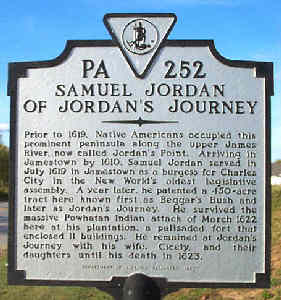
In the year 1620, she married Samuel Jordan and moved to his new estate. This was a 450-acre plantation on the James River, which eventually was called Jordan’s Journey. Jordan was considerably older than Cecily. He had a son her age. With the couple lived a little girl named Temperance Bayley, the heiress of the large estate next door. It appears that a Mr. Bayley may have been Cecily’s first husband, dying and leaving her with a baby. We may never know who are the parents of Temperance, but it seems strange for the Jordans to take her in if they had no interest. The next year, the couple welcomed a daughter, Mary.

1622 was a bad one. The surprise attack by the Indians killed a large portion of the population. Jordan’s palisaded fort became a haven for many who were not lucky and lost most of their possessions. One of the men who moved to the compound was William Farrar, a lawyer, who went to work for the couple and built up the plantation.

Right after the first of the year 1623, Samuel died. Cecily was pregnant with her daughter, Margaret. Within days of the funeral, the minister who had presided, Rev. Grenville Pooley, decided that the widow was too good to pass up. He came to visit her and offered her marriage. Having been widowed less than a week, she may not have been interested. She suggested that they not discuss it until after the birth of the baby. He took it as a yes and started to brag around the neighborhood. A few months later, Cecily contracted herself with Mr. Farrar in front of the governor and officials. Pooley sued for breach of promise and this was the start of a two-year law suit. There are witness testimonies extant today, giving credence to her side of the story, that she didn’t mean to get engaged to the minister. Eventually, Pooley found another woman who was acceptable to him and dropped the law suit before it got into court.

Cecily and William Farrar lived on Jordan’s Journey together. In the 1624 muster, they are listed as co-heads of the place. They quickly married as soon as the law suit was over. They had three children, Cecily, William and John. Within a few years, they moved to William’s plantation near Henrico where the younger children grew up.

William died in the mid-1630s. Cecily may have lived on for years, enticing people with her beauty and social skills. But she may not have married again.

THERE ARE JUST SOME DAYS….

THERE ARE JUST SOME DAYS….

There are just some days when you can’t get a measly 2000 words done! I don’t mean the days when you also have to go to work, grocery shopping, cook dinner, etc. I mean a day when you plan to write but everything goes wrong.

Take today. It is Sunday. I get to dedicate the day to writing my WIP and a blog, or two. And make dinner. No problem, right? The house is quiet and I get about two hours in the middle of the day when it is positively dead. Perfect for writing. The phone rings. It is a friend who I helped publish a book. I work on helping him with his question. Sigh of relief. I type one paragraph of the scene I am working on.

The phone rings. It wakes up the dog. He comes and sits next to me. At 75 pounds, that can displace me off center of my seat. This time it is my son with a question. We have a business together. It is important to share concerns. That was easy. Back to the WIP. Another paragraph. But I am losing track of what I wanted to write. Reread the chapter.

The phone rings. It’s my mother. She has questions. She is bored with this quarantine/stay at home rule. I answer her questions and turn my attention to the computer.

But, then, the dog, Hansel, wants entertainment today. I let him out on the lead. He gets onto the deck. I have just enough time to get to my desk, 15 feet from the deck, when he is pawing the door. “In, Mommy, in!” He doesn’t want to be outdoors. So, I let him in then go back to my desk. He paws at my leg. “Pay attention to meeeee!” I get up, go to the pantry, get him a dog biscuit, which he takes care of before I have the box put away. Then I go sit down, again.

He circles my husband’s chair as he naps, very soundly, I should add. No, I tell him. Do not wake up Daddy. So, he comes back to me. “Pay attention to meeee!” Well, maybe he would be happy going outside without the lead. We live in the woods, with very few neighbors. He can run and stretch his long legs if he doesn’t have on the lead. So, I open the door and offer him to go outside. “Oh, no. You aren’t going to make me go outside!” So, I shut the door and go back to my computer.

The phone rings. It’s my mother. She has some questions. They are the same ones as the last time.

I look at my WIP, a novella of 25,000 words. It is at 19,400. Have to start wrapping up this story. The dog is very insistent that he wants attention. I want to finish this story!

Oh, forgot about dinner! I go down to the basement to get some chicken out of the big freezer. Hansel follows me down. Maybe he can find something fun in the basement. No, I just needed the chicken. He follows me back up. I put the chicken to thaw and go back to the computer. “No, Mommy! I want fun!” Take a deep breath. He followed me to the basement. Maybe he will follow me to the front door. He does. I open the door and he dashes out. I follow him out. And he growls. “This is my playground! You aren’t allowed here!” He runs around the cars in the driveway, happy as a clam.

Back to the computer. Maybe I can get a few words written before it is time to make dinner. Assuming I don’t get any more phone calls!

MARY DOUGHTY VON DER DONCK O’NEALE

MARY DOUGHTY VON DER DONCK O’NEALE

Mary was one of eight children of Reverend Francis and Bridget Doughty. The reverend was ostensibly an Anglican minister who seemed to always have his own opinion on how things really were and how he should preach the word of the Gospel. Many credit him with being the first Presbyterian minister in the Americas. Most thought he was a crazy windbag. He lost his church in England after saying that the king had been elected. He then brought his family to Massachusetts, where he had difficulty getting and holding on to a church. He tried his luck in Providence, Long Island, Manhattan and Flushing before moving to Maryland.

Living a very unstable childhood, Mary finally met a stable, intelligent man, at age 17. Adrean Von der Donck was a multi-talented man eight years her senior. He already had an impressive career as a lawyer, explorer, political advisor, writer and, it appears, surgeon. After their marriage in 1645, Adrean patented thousands of acres of land on the mainland, just north of Manhattan island. The area eventually became known by an anglicized version of the Dutch word for gentleman, “Jonker” (Yonkers). They built a house there but did not spend much time at home. Adrean was sent back to Amsterdam for three years and did not return until 1652/3. While in Amsterdam, he published a very precise, descriptive book of the lower Hudson Valley, considered remarkable in scope. Returning to their plantation, he died within two years. Mary was about 27 when she was widowed. She may have had one son. Historians are unsure of this child.

A year or so later, Mary married an Irishman who had shown up in Manhattan, Capt. Hugh O’Neale. Their first child, Daniel, was born in New York. Since her father had already moved to Maryland, Mary and Hugh followed him down. The large plantation was left in the hands of her brother, Elias Doughty, to manage. He soon sold it.

The reverend had moved on to Virginia, where they briefly followed, only to move to Charles County, Maryland, soon after. This was a spot on the north shore of the Potomac River, not too far from the capital of St. Mary’s. Hugh became known as an Indian fighter, there. They developed a plantation of several hundred acres.

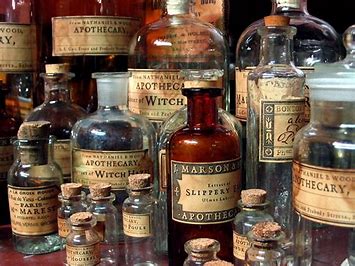
Here, Mary set up practice as a "healer". She worked with herbs, but occasionally added surgery to her repertoire, seeing as she had been married to a man who could do surgery. There was no control of shysters, at that time, and it is not known whether Mary was really any good at her chosen profession. Seeing as how she was brought to court, often, we wonder how well versed she was in aiding others. Some of the suits were patients trying to get refunds, others were to defend her mistakes. Some were brought against clients demanding payment. There are almost a dozen court dockets from the 1660s and 70s with Mary and Hugh as participants. Often, they lost.

Mary had three more children, Charles, Joy and Winifred. She lived to see them all grown. Mary died in 1689. Hugh lived on until the beginning of the 18th century.

Memories of Celine

Memories of Celine

Please excuse me if I sound a little disjointed. I have worked on this for a week and cry every time I do. Today is fraught with pain as my cousin is put to rest…..

It is a peculiar position to be the oldest child of the oldest child of the oldest child. Especially if each generation had children in their 20s. Most of the elderly relatives are still alive. And they have stories. So, to me, the 1920s are just as present to me as the 1960s. In a family who prized tradition, we celebrated holidays as if we were still peasants in Italy. As generations come and go, we all assume that each generation will be around for almost forever. The average age of death in my family is around 90.

That was, until this week. The world of our family stopped. Of course, the coronavirus played its part. But the brightest light of my generation was snuffed out too early. Not by the virus, but by some incipient mutation which caused chronic meyloid leukemia.

My cousin, Celine, was my first cousin. I remember when she came home from the hospital at two days old. I was just short of 9 and had a new baby sister, too. I knew all about holding babies. Now, there were two babies to dote over.  The two babies grew up to be best friends.

And I got to babysit, for 35 cents an hour. My siblings and I watched as three other cousins came, over time. And I got to babysit the first three often, before I went off to college. Celine was, quickly, the little mother, the organizer. Brian was the sensitive one. And Kristin was the happy one. Brendan, the youngest, came later, after I had moved away, so I didn’t get to watch him grow up. They lived on humor, music, their Faith, and cheese pizza on Friday nights.

Celine was bright, articulate, a great athlete (swimming and skiing) and a creative seamstress. She was a mechanical engineer, who put her whole career on hold so she could raise her children, herself. Her Catholic Faith was how she lived her life.

Named after a Catholic nun, Celine was an old soul. She was the type who could sit and contemplate, not like most of us who can not sit without something to do. She had her pink rocker on the front porch and could listen to the birds, aware of their joy. And their joy consistently was reflected in her smile. I am sure she had bad days, but I never saw one. All I saw was that magnificent smile that brightened a room.

Her parents have lost their oldest.  They should not fear. She is with her grandparents, who doted on all eight grandchildren. Her parents did a remarkable job in raising not only Celine, but the other three, as well. Celine will be missed more than we can predict. But she will live on in the lives of her daughters, Kate and Emily, who will remember their mother’s words. And she will live on in the hearts of her two wonderful parents and three siblings, who thought the world of her.

An Interview with Barbara Gaskell Denvil

An Interview with Barbara Gaskell Denvil

Picture

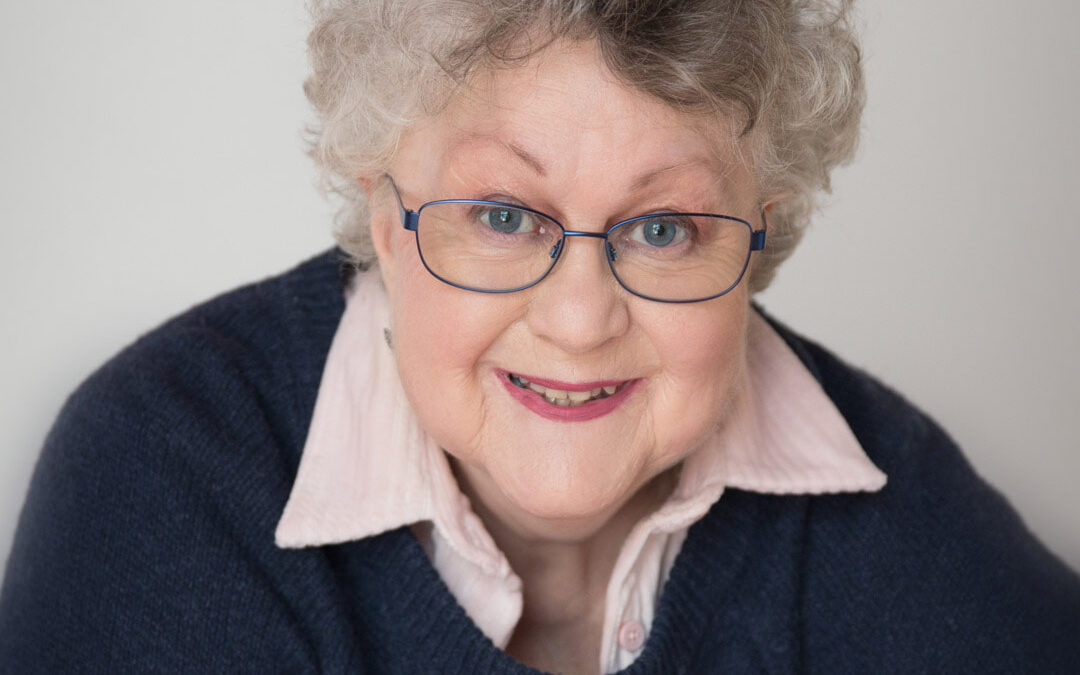
I recently met Barbara Gaskell Denvil, a well-established author from Australia. She accepted my invitation to an interview. Sit down with your cup of coffee and read, along with me, about this fascinating woman. 

Thanks so much, Elizabeth, for your invitation and the possibility for posting on your blog. I thoroughly enjopyed this interview, particularly as we have so much in common. History, and discovering the hidden truths, is an absolute passion of mine and has been ever since I was eight and watched the film of Shakespeare’s Richard III. I found it very exciting, but even at that age the horror of this murderous monster seemed somewhat exaggerated, and I wondered whether this king could have been quite so bad. A couple of years later, I began my research. And I have never stopped. 

  1. Tell me a little about yourself. Where do you live, education, family. Whatever you would like.

I am an ancient old crone who has a youthful passion for history. I also adore searching out the less well known details, but my principal story-lines cover the adventures of fictional characters against absolutely accurate backgrounds. It’s the English medieval I love, and having lived most of my life in London, I grew up walking those old cobbled back-lanes which still exist, exploring the Tower, the palaces, and the original buildings which still stand.
I have three children, including identical twins, but when my husband died of cancer, I needed to move myself and try not to wallow in memories. So, my children and their families with me, I moved to Australia, and that’s where I now live amongst the rural beauty and the amazing bird and animal life, with huge flocks of cockatoos, parrots and kookaburras, with kangaroos in the garden and reptiles of many kinds..
My original family were all creative academics, and so it seemed quite normal for me to start writing at a very young age. I worked in publishing, wrote short stories and articles, became a reviewer for Books & Bookmen, an editor, a tutor for television scripting, and finally a very busy mother.
But now of course I write full time, and started with my own love of historical fiction, mainly mysteries.

  1. What induced you to start writing?

I found it a natural move, and couldn’t even consider anything else. I read constantly from the age of 7, including mostly adult novels even at that age. Once I discovered and devoured Lord of the Rings, I developed another passion for fantasy. I still love those two genres more than anything else, and have written in both. My children’s series, BANNISTER’S MUSTER which includes six books, now also available on Audible, actually combines accurate medieval history with fantasy adventures. 

  1. Who is your favorite writer? Why?

I honestly have to be boring and say I have no actual favourite. There are too many I absolutely love – including the marvellous Dorothy Dunnett’s historical adventures, and Tolkien’s magical fantasy. Over many years I must have read thousands of books which I loved and admired. I admit I’m picky about the quality of writing itself, and love books with well developed characterisation. I’ve just finished reading something by Joe Abercrombie, a dark fantasy thriller, which is a genre new to me. But I love to try everything if it is high quality. And that’s what I hope to write myself.

  1. What attracted you to your special genre?

My travels around old London as a child, visiting Stratford and other ancient villages, and feeling that genuine atmosphere come seeping through my veins. I could breathe the old chimney smoke, I could see the flags and banners flying in the wind, I could feel the wet cobbles through my shoes, and hear the horses’ hooves cantering past me. I sat in the old Guild Halls of various towns, the churches and cathedrals, looking around at the beauty and magnificence designed and built so long ago, and I touched stone walls which had stood for a thousand years or more. Above all, I read of the past. I was fascinated by the Viking era, then moved on to the medieval. I’ve researched other periods too as all history fascinates me – the civil war – the renaissance – the Napoleonic wars – even the Cretaceous period and the dinosaurs. The differences and the scale of human development is amazing. But I cry too, discovering what dreadful brutality was treated as normal, and how people fought wars by literally hacking each other to death face to face. I visited an old castle in England, and saw a genuine old Rack there for display – almost as a joke. But that old black wood was stained, and I could imagine the blood spilled over the ages, and the terrible pain inflicted. So I researched the evil too, and included that in my books as a passionate and deeply sympathetic token of deep respect  to those who had been tortured in real life, even often the innocent.

  1. Who is the favorite character of all whom you have created? Why?

Perhaps Andrew, the hero in my novel BLESSOP’S WIFE, and Tyballis, who becomes his wife. Tyballis has been abused by her first husband, and this has almost broken her spirit. But I loved showing her courage, and how she rediscovered it, and fought both for herself and for the new man she now loved.
Andrew is not the usual hero – he’s not young, handsome, noble, or easy to understand. He has many dark secrets, but beneath the intelligence, secrets and strengths, he is kind and adores the woman he wants so much to help.
This novel is a medieval mystery, not a romance, but there is certainly a thread of considerable romance between these two major protagonists.
I feel genuine love for most of my characters, but these two are certainly amongst my favourites.

  1. Would you take a minute explain how you develop your stories

I always start with a sudden flash of inspiration. This can come from anywhere – a film or a book – something someone says or does – and very often just a vivid dream. Then over the following days I start to think about that piece of inspiration, and I encourage it to develop. My characters come first. They grow in my head and introduce themselves to me. Once I feel they have really come alive in my thoughts, I start to make a few notes.
But I am a Pantser, and will soon just sit down at the computer with a cup of tea, (and later a glass of wine) and start to write.
Yes, I’ll have bad days. I’ll get stuck, and will often change my mind and throw some bits away. But on the whole, the entire book will just float into my head. I will write and write and write for weeks and months, usually around ten hours a day, six days a week. Once I’ve finished, then I start all over again. I re-write, I polish, and I add extra details. Depending on the length of the book, it will take me between three months and five months to write. But that’s 60% absolute jo
y, and only 40% really hard and agonising work.

? 7. To end this interview, what piece of information, upcoming project, advice or request would you like to share with this audience?

I have begun a series, named CORNUCOPIA, which will probably take me a couple of years, as it will be around nine books and none of them too short. This will be a mixture of fantasy and history, for I have created a whole new world called EDEN, very closely based on the genuine medieval world of the 1400s. The clothes are similar, the behaviour is extremely similar and much of the language is similar as well. But there are some startling differences. Trains! Steam trains rush across the countryside. There are kings, but the country is governed by a secret council, which plots and schemes, unknown to most of the citizens. The religion is Mafia-like, and there is great poverty amongst great wealth.
But while I am enjoying writing this very quirkily series, I am taking notes for my next historical mystery – A SUYMMER OF DISCONTENT, and this will certainly not contain any fantasy of any kind. The crime, mystery and thread of romance will be set against a highly accurate background of medieval England.
In the meantime I should love to introduce you to my historical mystery THE FLAME EATER, which is a big crime mystery full of adventure, romance, crim and mystery. I found some fascinating historical facts when researching and I have a special fondness for my unusual hero Nicholas.  The heroine has a hard path to face, as I believe many young women would have faced at this time in history.

 The Amazon link for The Flame Eater.
https://www.amazon.com.au/Flame-Eater-Historical-Mysteries-Collection-ebook/dp/B01B8SEC3S/ref=sr_1_1?keywords=The+Flame+Eater&qid=1553405032&s=digital-text&sr=1-1-catcorr

My Author Page on Amazon –
https://www.amazon.com./Barbara-Gaskell-Denvil/e/B005M8E3ZS?ref=dbs_p_ebk_r00_abau_000000

My Webpage —–
https://barbaragaskelldenvil.com/

Thanks so very much, Elizabeth, it’s great knowing you and discovering your wonderfully fascinating blog.
All the very best,
Barbara