The 1920s was a decade of rebellion, free-for-alls and action. Everyone got wrapped up in the new culture emerging. Between the Great War and the Great Depression, there were a few years of craziness and decadence for the population of North America and Europe. The dying gasps of the agricultural economy were heard as people migrated to the new business and industrial economy.
During and immediately after the war, women were required to move into factories to take the places of the men who went to war and, then, the ones who didn’t return. Women began to see themselves differently. They saw themselves as people with rights, options and freedom. And they reacted to the perceived changes in a typical way…they over reacted! Opulence was in. Hems and hairlines were short.
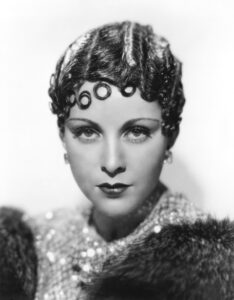
Women who worked in the factories had already started cutting their hair for safety reasons. Others followed suit. Especially movie stars. And, as the movies were getting more and more popular, the cinema goers were following the styles of the actors and actresses. Everyone started to cut their hair. Even the hesitaters cut theirs by the end of the decade.
“Bobbing” hair merely meant cutting the hair short. There was the Dutch boy cut and the blunt bob, both best for straight or straight-able hair. The slightly shorter version was the shingle cut, where a razor was used to cut the hair at the nape of the neck into a V. The Eaton cut, sported by singer Josephine Baker, was a hug-the-head shortest of all cut. The variations included kiss curls (or spit curls) and curl wings on the cheeks. The kiss curls were supposed to indicate how many different men a girl had kissed.
For those who had the time or the right kind of hair, there was the longer bob with finger waves and the even longer (not quite shoulder length) version called Marcel waves. These required hair gel, hot curling irons and hair clips to maintain. The finger waves were combed in by zigzagging the comb slowly through the gelled hair
The woman who could not part with her long tresses could have a fake bob, with most of the hair up in a chignon, held in place with bobby pins. (Did you ever wonder where the term came from, before?) Only the front looked like she had bobbed her hair. There were a few who would buy wigs to wear when going out so that they could look modern.
Accessories for the head were over the top in that decade. Thin fabric bands, worn low on the forehead with an off-center flower or jewel were quite common. Wider cloth bands, which practically covered the forehead, and all but the crown, were popular, too. Hats were close-fitting affairs made out of any soft fabric: wool felt, knits, cotton, linen, heavy rayon or, even, straw. Hats were worn plain as well as decorated. The hair had to be short and straight to handle the hats!
Cosmetics became popular. Heavy lid color, thick mascara and pencil-thin eyebrows were an imitation of the screen stars. Hair coloring was also used to copy starlets. The platinum blonde was born. Some henna products tripled in sales during the decade as drug store shelves could barely keep the favorite hair tint in stock.
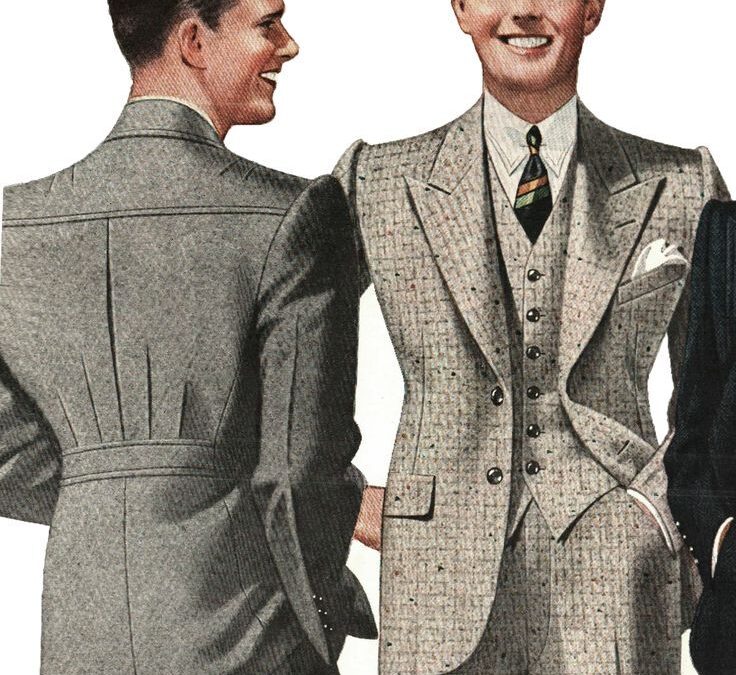
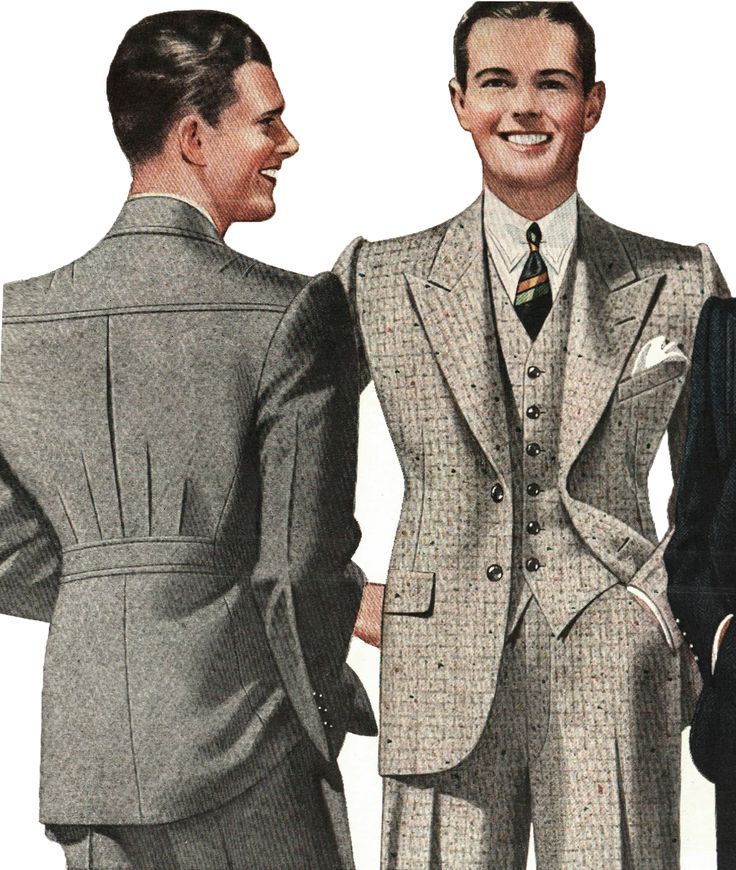
The styles of clothing changed for both men and women with the coming of the Depression. The fun-loving Roaring 20s morphed into more of a workingman’s mentality, where work and family took first place. Men began to honor masculinity, the Tarzan and tough man roles that were the rage at the movie theaters. Men started looking at themselves and evaluating their own masculinity. In an attempt to follow the trend, designers developed a look of wide shoulders, narrow waists and tapered wide leg pants to show off a man’s more muscular figure. By the 1930s, sports had stopped being a spectator sport and had become more of a participant sport. So, clothes had to be designed for the sportsmen. As sports became more prominent, a sense of the casual permeated the dress code.
Everyone who could, worked. Outside of laborers’ and servicemen’s uniforms, most men wore suits for the majority of the day. Material, cut and color dictated the use of the suit. The needed effect of these suits was to add an illusion of added height and width (at least in the shoulders). This was achieved with shoulder pads, slimming shaping at the waist, and various cuts of jackets and pants.
Suits came in winter weights and colors and summer weights and colors. In the winter, the suits tended towards navy, mid-brown and dark grey. Backs of the jackets tended to look one of two ways: the smooth, ventless (cheaper) version we see most often nowadays and the sporty belted back version with pleats.
The patterns were solid, glen plaid, herringbone, stripes, checks and windowpane checks. Summer suits had more variety, with colors as varied as medium blue, tan, beige, cream, golden brown and grey. They had more patterns, adding chine, birdseye (a small diamond pattern with each diamond having a dot in the middle) and vertical and diagonal stripes. The “Palm Beach” summer suit was made of a cotton/mohair blend with an open weave. Other summer materials were seersucker, shantung silk, rayon blends, linen and gabardine. This last one was quite popular. It is a tight weave of wool, cotton, texturized polyester or a blend of these, with a prominent diagonal rib on the face of the material. The pants were so durable that men could wear the bottoms without the jackets, for a casual look, without worrying about wearing them out. Single-breasted and double-breasted varieties of the jacket existed. Double-breasted built up a thin man.
Suits often came with matching vests. These were 5-6 button fronts with or without lapels, mostly single-breasted. The pants were designed to fit high on the waist, with full leg, tapering slightly to the cuffed ankle. They were in both pleated and flat, for a lean look, versions. The ironed crease down the middle of the pant, front and back, was designed to add height. The waist band had belt loops for narrow belts and, by the mid-30s, with technological advancement, the zippers made button-flys a thing of the past. The deep crotch drop would be popular for several more decades. One pant style did not last too long: the very high waist pant which young men wore with short sweaters.
Sport coats became a welcome addition to an American man’s wardrobe. Mixing and matching jackets and pants extended an otherwise limited wardrobe. The sports coat tended to be of gabardine or some other strong material. It came in a variety of colors from golden tan to blue to ivory. Green and burgundy were less common, but seen. Men paired sports coats with matching or contrasting pants, both in color and texture. Although it was a strictly country item in the UK, men in the US started using this casual look for the office.
Dress shirts were similar to what we see now, with a variety of patterns and colors. Cotton broadcloth was the most common material. In the late 30s, rayon and silk rich-hued shirts became popular. The long sleeves had one button or French cuffs, and a single chest pocket. The collars were narrow, pointed down and 3-5” long.
Ties came in every possible design and color to coordinate or clash (as the wearer saw fit) with the shirts. Handwoven ties made of textured materials became popular.
Coats did a lot of redevelopment in the 1930s, starting with a variation on the British grenadier greatcoat of the early part of the century. Full shoulders and upper arms of the coats were supported by shoulder pads. The arms tapered to the wrist and the torso tapered to the waist. Two pleats in the back were inserted for needed ease of movement. In the mid-30s, the raglan sleeve coat was popular, in both single and double-breasted styles. They were in plaids and checks, with herringbone tweed becoming popular by the end of the decade. Solid colors with a print lining were common. Richer men wore the coat with fur lining in the winter. The camel hair top coat and the tan wrap coat became quite popular with young men. The wrap had a big collar to flip around the neck, a full, shorter skirt, with the tie belt moved to the side. The most popular coat of the decade was one designed for the detectives of the ever-popular movies, the trench coat.
Hats were worn by all men in the 1930s. The most popular was the classic fedora. It was made of fur felt or wool felt. It had a 5-6” crown, a deep center dent, with an optional pinch front and a 2 ½” brim. Men shaped their hats in various options. The conservative businessmen wore homburgs, in dark colors. This hat had a lower crown, with a rolled rim with a grosgrain edging and a wide ribbon band. The bowler was on its way out by 1930. In summer, straw hats in these shapes could be found. Boaters, hats with flat crown and brim were popular with the young men. These hats boasted ribbons in the colors of their college or organization. The pork pie hat, in straw or felt was a new phenomenon. The brim curled up all around, with a flat crown. In the movies, men who wore these hats tended to be portrayed as less intelligent.
Shoes were quite stylish during the decade. Oxfords, 2-toned oxfords and wing tips were the most common. The colors were black, brown, brown with cream, black with white, black with grey or white. They were worn to match the outfits. The decorations included the wingtips, contrast stitching and decorative tooling.
The most comical part of men’s clothes were their socks. Silk socks came in all possible patterns and colors. Men mixed and matched their socks and pants. Blue pants and green and yellow socks would not be out of line.
Men used accessories such as watches, either pocket or wristwatches, some jewelry and gloves. These gloves ran the gamut from workmen’s gloves to driving gloves, a shorter version of thin material, to get a good grasp of the steering wheel. Men wore day gloves, if very well dressed. White leather gloves for formal evenings were used with formal clothing.
This decade was one of the most-classy for men’s fashions. Just look at any 1930s period film! Thanks for reading this blog. I hope it helps you picture your characters’ looks a little better.
When writing about your heroine’s clothes, you must remember her place in society. The Depression put a severe change in the clothes styles of those years. But not everyone got poor and lived in the Dust Bowl, either.
Every woman who was under 30 in 1930 was sure to dress more modern. That meant whatever the stylish hem length of the day, whether it was knee length or mid-calf. Only the matrons did not follow suit.
The Depression meant better use of accessories to dress up the fewer outfits that women had in those years. That was discussed in the last blog post.
Dresses were categorized: day dresses and going out dresses. The day dresses could be thought of as the dresses worn to cook and clean house. No self-respecting woman would go downtown in a “day dress”. These tended to be made out of cotton broadcloth, with, often, bold patterns of flowers or checks on the material. They often had full sleeves, yokes, small collars, made in a wrap-around style for easy on-off wear. Some were made completely reversable, so the wearer had two dresses in one. They were of a slender bias cut, with a flared hem, and the matching belt. Shoes were most often oxfords with a thick heel. They were not beautiful but they were comfortable.
To go out, one would change to the afternoon dress. These dresses were often plain, but not severe, made of silk, rayon crepe, or linen. They actually had a similar silhouette to the day dress, the slim bias cut with puffy sleeves, but they were garnished with embellishments like bows, rushing, embroidery, decorated buttons, flowers and other trims. In the spring and summer, pastels were worn, especially peach and aqua. In the fall and winter, earthy colors, like burgundy and maroon, were used. Rayon tweed and corduroy were common materials. Shoes for going out were often a variety of oxford, but with cut outs in the leather for ornamentation. Dress length tended to be mid-calf. Collars were often big. Shoulders were big, too, trying to get that big, tall look that was so elegant at the time.
For business attire, skirt suits were common. Most popular materials were linen for summer and wool for winter. The skirts were long at the beginning of the decade, moving up to knee length by the end. They were flared or gored, following body lines but not tight. The waist was worn high.
With the skirt, blouses or sweaters were worn. The button-down-the-front cotton blouse was a must have. Whites and floral prints, in sheer rayon, were most in demand. Sweaters were short and snug around the waist, fitting mostly like a blouse, sometimes having blouses under them. Short sleeves for either blouses or sweaters were puffed. Long sleeves were full. Necklines were very modest with small collars of various shapes on blouses. Decorative details, like shirring and bows were common as a way of modestly accenting the bust. If a woman had a low neckline, she filled in the space with a scarf. Dressy blouses were made of silk, lace, organdy and satin.
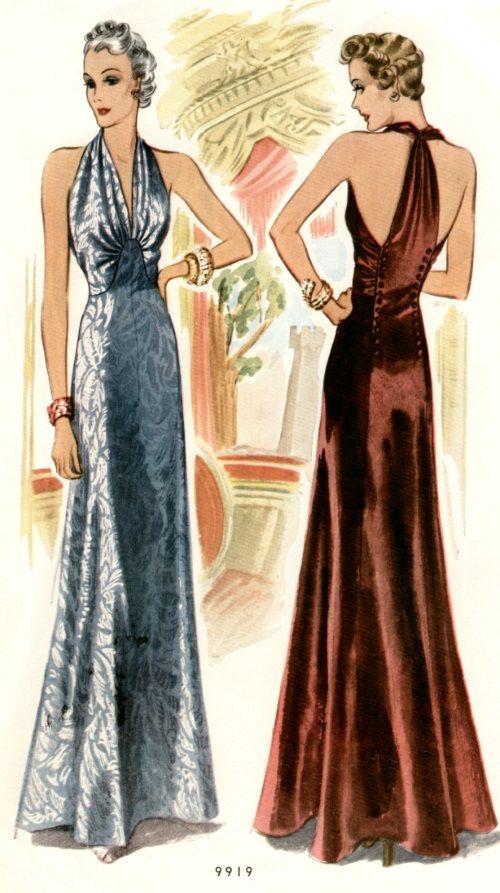
For those who could afford such things, evening gowns were a common sight, at least on the movie screens. They were very revealing by daytime standards. Low necklines and non-existent backs combined with silky satin, lace, velvet or taffeta, cut on the bias, made dresses comfortable to dance in. They all seemed to be very clingy and sported short trains for elegance. The shoes looked like delicate high heeled slippers.
Coats tended to be cut similar to dresses, with built up shoulders, bias cut, full without cling. Many had removeable fur collars for ease in cleaning. And hats to match or coordinate.
Pants became acceptable for women to wear to watch or participate in sports events. (Croquet, anyone?) They were very wide at the ankle, and more often worn with stripped knits rather than blouses.
Before we go, just remember that those beautiful women on the screen translated into cosmetic sales going through the roof despite the poverty of the decade. By the end of the 1930s, everyone knew how to be a peroxide blonde and how to put on lipstick. It was universal!
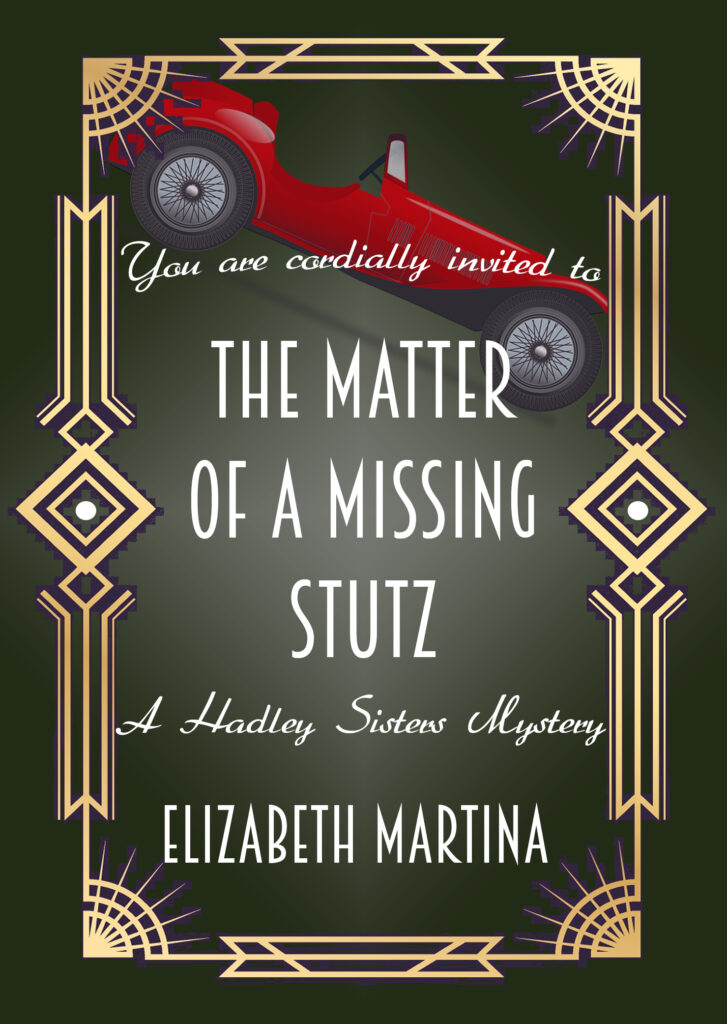
The Matter of a
Missing Stutz
Book 2 of the Hadley Sisters Mystery series: Available now at Amazon in ebook and soon in paperback
Writing historical fiction based in the 1930s, makes me curious about how my heroines dressed. Kate and Betty Hadley, my starring ladies, live in Louisburg Square, Beacon Hill, Boston. That means they have money. Well, their father does, anyhow, and they live at home with him. (They are still young.)
With that said, they are not at all poor and they do not have to work for their food and living accommodations. They do not dress like the poor Depression-era women in their wrap-around cotton dresses with the tiny print design, kerchiefs and comfortable oxfords. The styles are extremely different from the Roaring 20s when women were just getting voting equality. To accent equality, they often wore their hair short, straight, masculine. Their clothes were also square cut, with a dropped waist, hiding their feminine shape
My ladies dress more like the Hollywood actresses, or, at least, like the other Boston Brahmins. Let’s look at a few instances.
Hair:
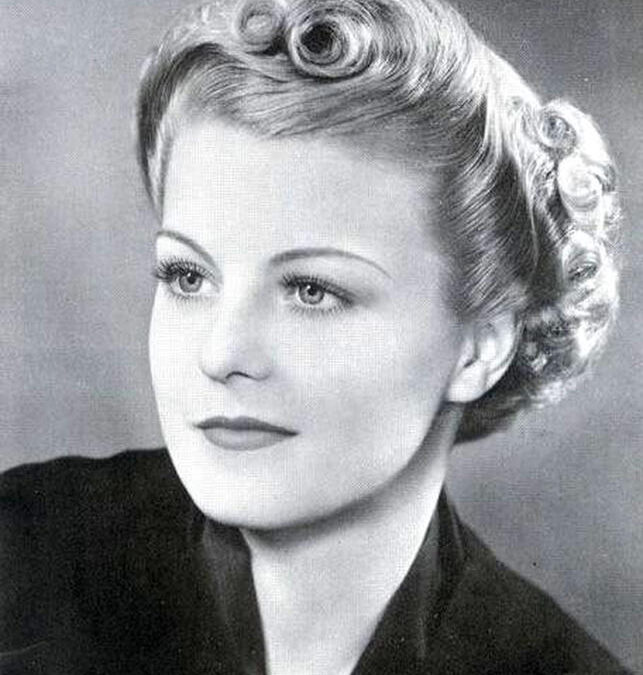
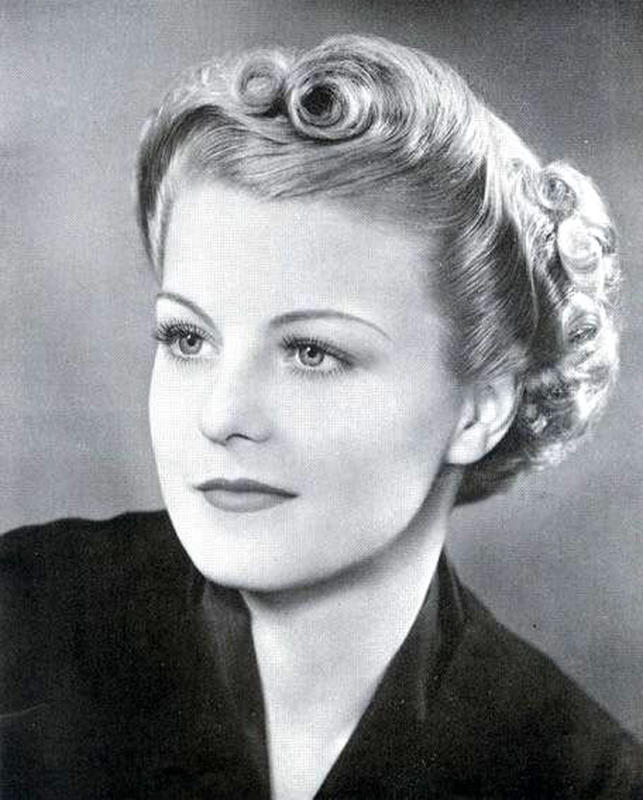
Betty is blonde and Kate is brunette. Their hair has long since grown out of the square cut boy-look of the 20s. Straight hair is out. Waves and curls are in. And since most of us do not have naturally wave-perfect hair, that means help is needed. Finger curls and pin curls solve many of the problems of trying to get the hair to curl. Short hair is curled into ripples by wetting it and placing open hand on the hair, press down and pull fingers together, hold a minute then gently pull away without disturbing the hair. Another technique, especially for longer hair, is curling the damp hair and pinning the curl against the head, then waiting until it dries. Taking the pins out gives the patient woman a head-full of curls. The finished product often has barrettes or flowers to enhance the femininity of the look.
Different hairdos require different hat styles. Over time, the stylish cloche added a brim and the brim grew. It became a slouch hat, with the brim turned up at the front. This hat is mostly for straight hair styles or short- hair. The most common hat is a small felt one with a single feather. In the summer, two types of hats are popular, the small white, flat one or the large wide-brimmed one, to help with the sun. Late in the decade, the men’s style fedora became popular, and Kate and Betty wear them when trying to look serious.
A very important part of dress is accessories. Bags at the beginning of the decade were small and flat, carrying very little. Later in the decade, they got a little bigger, with handles. They are big enough for Betty to carry her pen and notepaper, which she always does. However, the bags do not work with evening dresses. For that the ladies change to small purses, with jeweled clasps, or gold and silver lame cloth. The other important accessory is gloves. A well-dressed woman always wears gloves when she goes out. During the day, the gloves reach mid arm length. They are made out of fabric like cotton, or lace, or leather, depending on the outfit. Coordination is of the utmost importance. For those who can afford it, coordinating shoes, purse, gloves and belt is considered very chic. Evening gowns require longer, over-the-elbow gloves, usually white or a very pale pastel. However, that depended on the style of dress. Some dresses have matching boleros, in which case the long gloves do not work.
Why would a woman think her husbands loves his Stutz Bearcat more than he loves her? What did he mean when he repeated "The Stutz, the Stutz" as he lay dying? For that matter, what is a Stutz Bearcat? The answers are in the new book, coming soon.

Recent Comments